Authors
Topics
Lists
Pictures
Resources
More about J. R. Partington
J. R. Partington Quotes
30 Sourced Quotes
Source
Report...
The extension of Black's method by the physicist Lavoisier led to the downfall of the purely qualitative theory of phlogiston, and gave to chemistry the true methods of investigation, and its first great quantitative law—the law of conservation of matter.
J. R. Partington
Source
Report...
It is clear, however, that the distinguishing mark of the whole development of theoretical chemistry and physics is the elimination of the anthropomorphic elements, especially specific sense-impressions, from the concepts. This process is called by Prof. M. Planck the objectification of the physical system.
J. R. Partington
Source
Report...
[Walter] Nernst was a great admirer of Shakespeare, and it is said that in a conference concerned with naming units after appropriate persons, he proposed that the unit of rate of liquid flow should be called the falstaff.
J. R. Partington
Source
Report...
Gunpowder was known to Roger Bacon and Albertus Magnus about 1250, but... I conclude that both obtained a knowledge of it from Arabic sources.
J. R. Partington
Source
Report...
Side by side with the production of metals, the Egyptians and the inhabitants of Mesopotamia perfected the arts of making glazed pottery... and the production of glass.... vessels were baked in tall closed furnaces. "Egyptian blue" was made in Egypt by heating silica with malachite and lime... applied with soda as a blue glaze on faience, and the blue glass is also colored with copper. Some early... Egyptian and Babylonian blue glass are coloured with cobalt.
J. R. Partington
Source
Report...
We find Theophrastus (315 B. C.) describing... the manufacture of white lead... lead is placed in an earthen vessel over sharp vinegar, and after it has acquired some thickness of a kind of rust... they open the vessels and scrape it off.... repeating over and over again... til it is wholly gone. What has been scraped off they then beat to a powder and boil with water for a long time, and what at last settles to the bottom is white lead.
J. R. Partington
Source
Report...
To a person whose experience has never been brought into relation with the object sulphur, the name signifies nothing; to the scientist... his concept involves the ideas of specific gravity, crystalline form, element, atom, and the like, derived from past experiences. His concept is distinguished from the other by involving... number or quantity.
J. R. Partington
Source
Report...
The earliest chemical theory was qualitative in the strictest sense; the so-called Aristotelean doctrine of the four elements assumed that air, water, earth, and fire, were qualities impressed on a primal matter; and the changes of material bodies were explained by the assumption that properties could be taken up by, and impressed upon, or removed from, the base-stuff. Transmutation as a possibility followed at once, and centuries of vain endeavour were required to impress the fact of its impossibility, leading to the true concept of element.
J. R. Partington
Source
Report...
We perceive clearly that theories and hypotheses are not accepted or rejected outright; they have their periods of activity, and then lie dormant for a time, only to be revived in a new form later on.
J. R. Partington
Source
Report...
The earliest applications of chemical processes were concerned with the extraction and working of metals and the manufacture of pottery.... The irruption of an iron using race or races into Mediterranean sites... introduced the Iron Age... but many of the oldest arts still survived in almost their original form. The potter, for example, still used nearly the same materials and appliances as Neolithic man.
J. R. Partington
Source
Report...
Wenzel and Richter, the latter... of most pronounced mathematical temperament, laid the foundations of stoichiometry, or "the art of measuring the chemical elements".
J. R. Partington
Source
Report...
The fundamental materials from which we construct our picture of the universe may appear in different shapes, but there is really very little discontinuity between what seem at first sight very different views.
J. R. Partington
Source
Report...
From the time when Guldberg and Waage gave quantitative form to the speculations of the physicist Berthollet, a clear conception of chemical equilibrium, in sharp contrast to an anthropomorphic theory of affinity dating back to Hippocrates and Barchausen, has yielded rich and abundant fruit.
J. R. Partington
Source
Report...
The results of a scrutiny of the materials of chemical science from a mathematical standpoint are pronounced in two directions. In the first we observe crude, qualitative notions, such as fire-stuff, or phlogiston, destroyed; and at the same time we perceive definite measurable quantities such as fixed air, or oxygen, taking their place. In the second direction we notice the establishment of generalizations, laws, or theories, in which a mass of quantitative data is reduced to order and made intelligible. Such are the law of conservation of matter, the laws of chemical combination, and the atomic theory.
J. R. Partington
Source
Report...
The Greek chemical treatises contain... a great amount of practical chemical information... fusion, calcination, solution, filtration, crystallization, sublimation and especially distillation; and methods of heating include the open fire, lamps, and the sand and water baths. Nearly all this practical knowledge... the Arabs... derived... from the very source we are now considering.
J. R. Partington
Source
Report...
In early physical systems we have optics dealing with phenomena perceived by the eye; acoustics treating of auditory percepts, and so on. The subjective concepts of "tone" and "colour" have now been replaced by the objectified concepts of frequency of vibration; and wave-length. The object of this process of elimination is, according to Planck, the striving towards a unification of the whole theoretical system, so that it shall be equally significant for all intelligent beings.
J. R. Partington
Source
Report...
Dalton, the mathematical tutor, following up the lead of Newton, combined the whole of the results of quantitative measurement which had accumulated up to his time, in a comprehensive theory, based on the concept of the chemical atom.
J. R. Partington
Source
Report...
The Atomic Theory and the Periodic Law have been given prominence, since their neglect unfailingly leads to obscurity and triviality.
J. R. Partington
Source
Report...
The blue dye indigo was obtained from the indigo plant by the Egyptians more than 4000 years ago.... The famous and valuable "purple of Tyre" was perhaps first made in Crete in very early times... obtained at great cost... from tiny marine molluscs.... The scarlet dye mentioned in the Bible was obtained from the kermes insect (hence the name "crimson").
J. R. Partington
Source
Report...
A great number of our common ideas and ways of looking at the world were really shaped for us by the Greeks of antiquity, and... incorporated into the scientific knowledge of today. Such ideas as those of matter, force, element, number, space, time, etc., came to us from the ancient Greeks.
J. R. Partington
Source
Report...
If the present volume will help towards the comprehension of the fundamental principles on which the science of thermodynamics rests, and also serve to bring home the importance of a knowledge of these principles in the suggestion and interpretation of experimental work, the purpose which has been kept in view during its preparation will have been amply fulfilled. In any case, it is hoped that neither the extreme view that thermodynamic principles alone suffice in the construction of a systematic physical or chemical science, nor the equally mistaken opinion that they are of little practical utility to the experimental worker, can fairly result from its study.
J. R. Partington
Source
Report...
The Alexandrian chemists were very near to a recognition of gases.
J. R. Partington
Source
Report...
The quantitative investigations of Black on the burning of lime and magnesia alba, in which the balance (previously characterized by the French chemist Jean Rey as "an instrument for clowns") was applied at every turn, led to the rejection of a hypothetical "principle of causticity," and replaced it by a "sensible ingredient of a sensible body," fixed air.
J. R. Partington
Source
Report...
The statement of a law of nature involves the formation of a concept, or general idea, in which the likenesses of phenomena are collected, and the differences, in so far as they are not intimately involved in the nature of the case, are eliminated.
J. R. Partington
Source
Report...
There are not wanting, even today, chemists who advocate "purely chemical" methods in chemistry, and cannot appreciate the value of physical evidence in conjunction with mathematical calculations. We can only hope that their number is decreasing exponentially with time.
J. R. Partington
Source
Report...
It is necessary to guard against a possible danger... of submitting too readily to the result of a so-called "crucial experiment". Very few experiments can, in the nature of things, be really crucial. One so-called "crucial experiment" which decided between Newton's corpuscular theory of light and Huyghens' wave-theory, viz. the relation between the law of refraction and the velocity of light, was not at all decisive.
J. R. Partington
Source
Report...
The philosopher Comte has made the statement that chemistry is a non-mathematical science. He also told us that astronomy had reached a stage when further progress was impossible. These remarks, coming after Dalton's atomic theory, and just before Guldberg and Waage were to lay the foundations of chemical dynamics, Kirchhoff to discover the reversal of lines in the solar spectrum, serve but to emphasize the folly of having "recourse to farfetched and abstracted Ratiocination," and should teach us to be "very far from the litigious humour of loving to wrangle about words or terms or notions as empty".
J. R. Partington
Source
Report...
Some recent short publications on Chinese gunpowder and firearms are misleading... I have had valuable assistance from Dr. J. Needham... If the dates of the texts are correct, the discovery of the use of saltpetre in explosives and the development of gunpowder are to be sought in China from the eleventh century. The history of gunpowder is associated with that of saltpetre, no comprehensive account of which was available.
J. R. Partington
Source
Report...
Disagreement between theory and experiment has proved a most potent agent in broadening theoretical views, and in making clear the necessity for new concepts or hypotheses.
J. R. Partington
Source
Report...
The Chinese early learned to work in metals; bronze occurs in the 11th-10th centuries B. C., useful iron from about 500 B. C. At a later period they made brass... True porcelain was first made about A. D. 600. They were probably in possession of mercury at an early date, and learnt how to decompose cinnabar into mercury and sulphur, and recompose it from these materials.
J. R. Partington
Quote of the day
We cannot suppose therefore that God has made an order of beings, with such mental qualities and powers, for the sole purpose of being used as beasts, or instruments of labour.
Thomas Clarkson
J. R. Partington
Born:
June 30, 1886
Died:
October 9, 1965
(aged 79)
Bio:
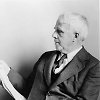
James Riddick Partington was a British chemist and historian of chemistry who published multiple books and articles in scientific magazines.
Most used words:
chemical
theory
time
law
blue
quantitative
concept
early
mathematical
knowledge
science
chemistry
materials
form
number
J. R. Partington on Wikipedia
Suggest an edit or a new quote
British Chemist Quotes
Chemist Quotes
19th-century Chemist Quotes
Featured Authors
Lists
Predictions that didn't happen
If it's on the Internet it must be true
Remarkable Last Words (or Near-Last Words)
Picture Quotes
Confucius
Philip James Bailey
Eleanor Roosevelt
Letitia Elizabeth Landon
Popular Topics
life
love
nature
time
god
power
human
mind
work
art
heart
thought
men
day
×
Lib Quotes